
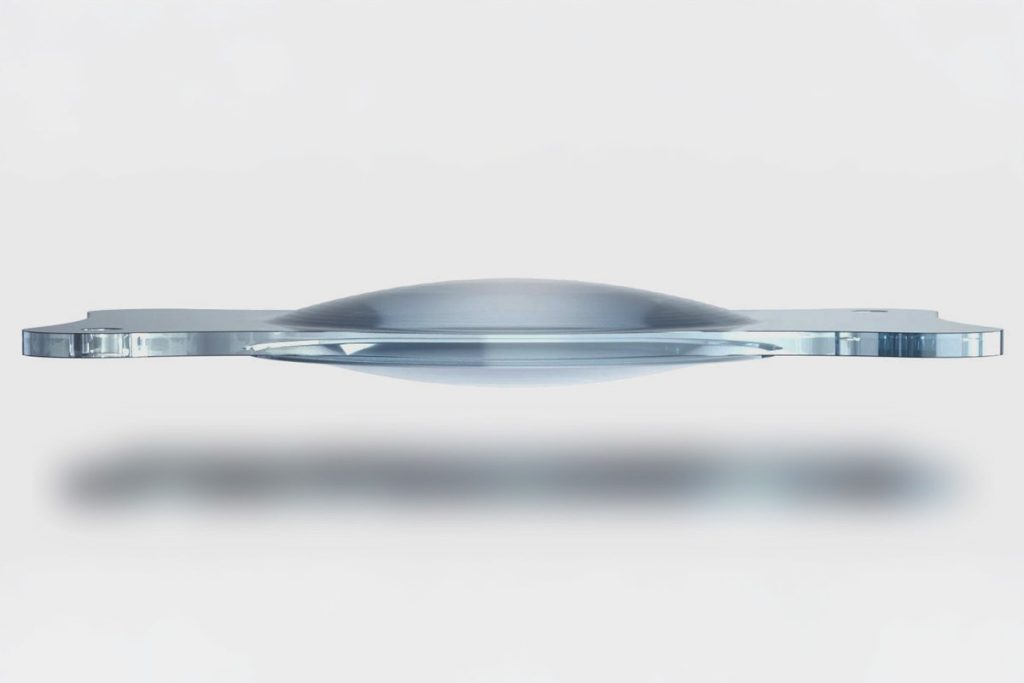
Premium Smart Intraocular Lens Applications
The loss of transparency of the intraocular lens located behind the pupil is called cataract. The development of cataract is most often encountered as a natural consequence of ageing; however, it can also rarely develop congenitally, after trauma, or due to the use of certain medications.
With longer human lifespans, cataract surgery is today the most frequently performed operation in the world. Once cataract begins to develop, there is no medical treatment that can reverse the process. For this reason, once the complaints begin, the necessary action is to remove the lens that has lost its transparency and replace it with an artificial one.
Until about 10 years ago, this operation — performed as a standard procedure that required the use of both distance and near glasses afterwards — has now become, thanks to recent developments, one that allows life without glasses.
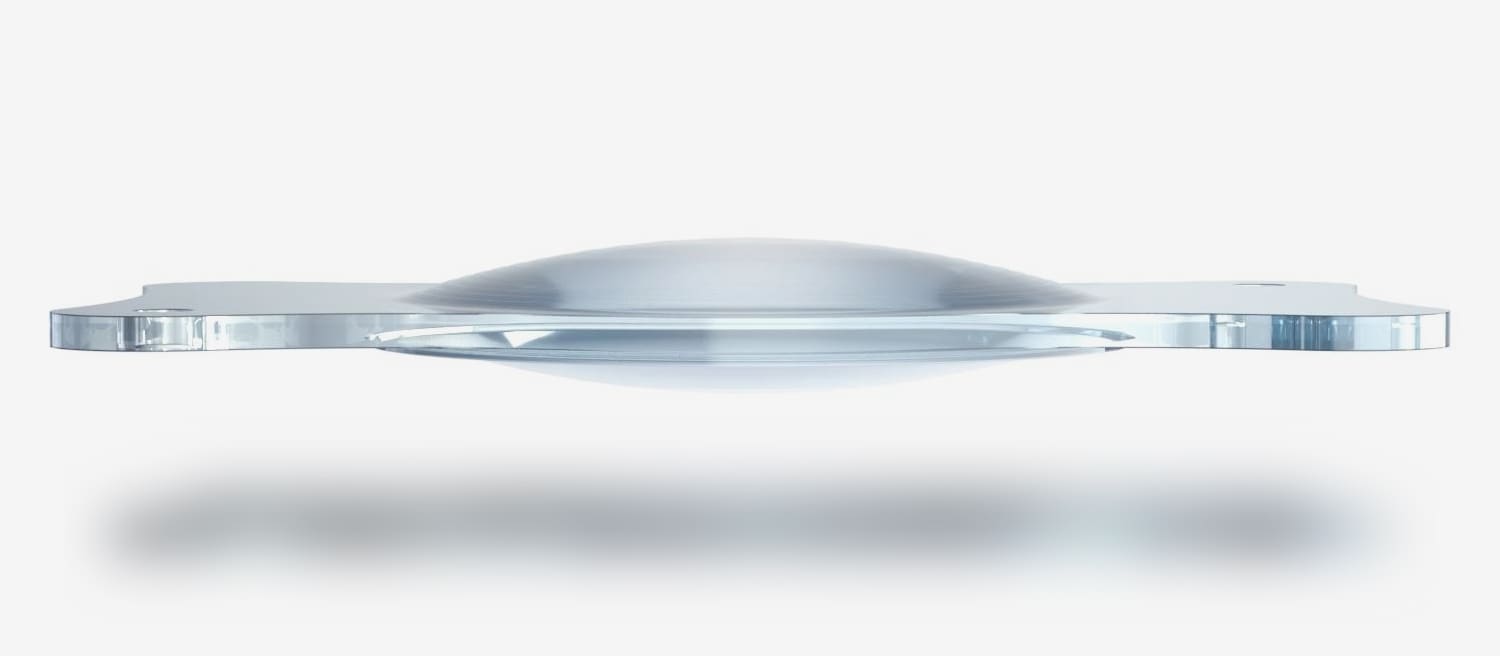
The premium — that is, high-quality — smart lenses used for this purpose can be examined under three main groups:
1. Toric lenses: Astigmatism is a refractive error arising from the structure of the eye that impairs both distance and near vision. This defect, which standard lenses cannot correct, can be permanently corrected with toric lenses, and the need for distance glasses after surgery is eliminated.
2. Multifocal lenses: These are lenses that provide both distance and near vision.
Up to a certain age, our natural lens has the ability to accommodate — that is, to change its refractive power according to the distance and adapt. At the ages of 40–45, this ability gradually diminishes, and we have to wear glasses to see near. This condition, which we call presbyopia or “the ageing eye”, is — as the name suggests — actually a natural ageing process. Excimer laser applications, which have been used successfully for many years, also have no permanent corrective effect on presbyopia.
Industry efforts to produce accommodating lenses that work like our natural lens — that is, focusing near and intermediate distances through the movement of our eye muscles — are continuing at full pace, but the desired point has not yet been reached.
For this reason, near vision can today be provided through different optical principles and lens designs. Among the multifocal lens technologies that have developed over the past 20 years, diffractive trifocal smart lenses are currently the most preferred.
Diffraction is the formation of different foci as light bends when passing through a structured surface. In diffractive trifocal lenses, the light is split into three different foci — for near, intermediate and distance — at the rings on the lens.
While the splitting of light gives us clear images at these three foci, it can also produce unwanted effects such as reduced contrast sensitivity, haloes around lights and glare. The severity and duration of these unwanted effects, called photic phenomena, can vary from person to person. After a certain period of adaptation, the brain adapts to this new situation.
3. EDOF (extended depth-of-focus) lenses:
These are lenses that provide uninterrupted vision between distance and intermediate ranges. Their near-vision potential is lower than that of trifocal lenses. In general practice, the non-dominant eye is targeted with slight myopia to support near vision. There are various designs of EDOF lens using different optical principles, but the most preferred are diffractive aspheric lenses. As these lenses have fewer diffractive rings than trifocal lenses, photic phenomena occur far less. EDOF lenses are preferred in younger patients in active working life and in those who have previously undergone refractive surgery.
Points to consider in premium smart lens applications!
Premium lenses are today the only permanent treatment for presbyopia, the near-vision problem that arises after a certain age. For this reason, particularly for those over the age of 50 who want to be free of glasses, lens replacement is performed instead of excimer laser; because there is no cataract, this procedure is called refractive lens exchange.
Refractive cataract surgery — or refractive lens exchange — is actually an elective procedure carried out at the patient’s choice. As with every elective procedure, the decision rests not with the doctor but with the patient. The doctor’s duty is to inform the patient correctly and to perform the surgery to the highest standard.
The implantation of lenses that provide near vision requires certain conditions. Put simply, in the presence of any problem in the eye other than refractive error or cataract, these lenses should not be implanted. Macular degeneration, diabetic retinopathy, severe dry eye, corneal dystrophies, keratoconus, optic neuropathy and advanced glaucoma are conditions in which smart lenses should not be implanted.
If the structure of the eye is suitable, your doctor will perform many calculations to determine the power of the lens to be implanted. If your astigmatism is above a certain level, toric lenses should be preferred — because the most important cause of post-operative patient complaints is even a small residual refractive error.
Since the implanted lens will remain in the eye for life, the quality of the material from which the lens is made is very important. In this sense, the material most compatible with the capsular bag that originally houses the natural lens is hydrophobic acrylic. Because hydrophobic acrylic adheres to the capsule, the lens settles on the functional axis of the eye more reliably, and the stability of toric lenses is more successful.
In addition to the quality of the material, the surgery itself must also be carried out without complications. In this sense, the use of femtosecond-laser technology, which standardises the important stages of cataract surgery, is an advantage.
In conclusion, there are many factors that can affect the outcome in premium-lens applications, and this surgery may not be suitable for everyone. In suitable patients, however, the result of an optimal procedure leaves our patients delighted.
Prepared by the Editorial Board of the Eye Foundation Hospitals.