
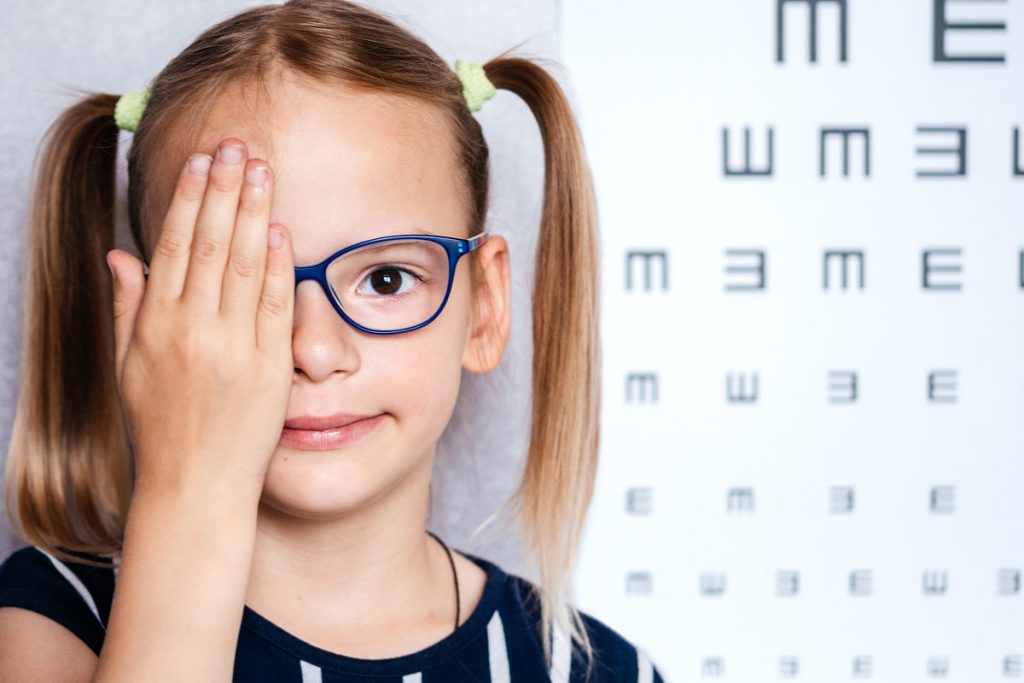
Amblyopia — known in everyday language as “lazy eye” — is a disorder of the visual system arising from the abnormal development of visual pathways during development. Amblyopia is characterised by reduced vision in one or both eyes that cannot be explained by structural ocular or optic-nerve abnormalities alone. It is the most common cause of reduced vision in one eye in children and young adults.
WHAT ARE THE CAUSES OF AMBLYOPIA?
- Deviation of the eyes (strabismus),
- A large difference in prescription between the two eyes,
- Drooping of the eyelid that obstructs the visual axis, or
- Congenital cataract.
WHAT ARE THE SYMPTOMS OF AMBLYOPIA?
The leading symptom of amblyopia is vision loss that cannot be corrected with glasses or other treatments. The lazy eye sees less. Deviation and strabismus of the eyes, and involuntary movements of the eyes (nystagmus), are also symptoms of amblyopia.
WHO IS AT RISK?
Those with first-degree and second-degree relatives with amblyopia, congenital ptosis, cataract, keratitis sequelae and any other cause that obstructs vision may lead to amblyopia.
HOW IS AMBLYOPIA DIAGNOSED?
Amblyopia can be diagnosed through a routine eye examination at an eye clinic that has all the necessary imaging equipment and a paediatric ophthalmology specialist.
HOW IS AMBLYOPIA TREATED?
Glasses
Patching the sound eye for specific hours each day, as determined by the specialist doctor, in order to exercise the weaker eye.
Cycloplegic medications
In those with deviation of the eyes, strabismus surgery may be required.
Vision-enhancing simulations such as CAM / Neurovision.
Newly developed virtual-reality glasses exercises.
Correction of existing problems such as ptosis and cataract.
HOW DOES AMBLYOPIA AFFECT MY VISION?
The lazy eye sees less than the other eye. This reduction in vision may, at later ages, prevent certain things such as obtaining a driving licence and joining the army or police force. Because one eye sees poorly, high-quality three-dimensional vision cannot develop. This can lead to problems such as clumsiness and lack of coordination.
IS THERE A SURGICAL TREATMENT FOR AMBLYOPIA?
For the causes leading to amblyopia — such as strabismus, cataract and ptosis — there are surgical treatments, but in order to resolve the resulting amblyopia itself, several different treatments must be applied simultaneously, consistently and over a long period. Surgery is sometimes the start of treatment, but in some situations — such as strabismus — it is used as a last resort or as an additional treatment.
Prepared by the Editorial Board of the Eye Foundation Hospitals.