The femtosecond laser is a laser technology used to correct refractive errors such as myopia, hyperopia and astigmatism. Femtosecond lasers are laser systems that can fire at intervals as short as a quadrillionth of a second, never damaging tissue outside the targeted area, and that can make the desired incisions smoothly and very precisely. Thanks to the extremely brief pulse, the heat produced at the point where the laser is applied does not transfer to neighbouring cells, taking effect only at the focused point. As a property of its infrared wavelength, the femtosecond laser beam can pass through transparent media, and within the corneal layer — the transparent front layer of the eye — bubbles of 1–3 microns containing carbon dioxide and water are formed. These bubbles bring about tissue separation, allowing much more precise, rapid and reliable incisions. The technology offers very significant advantages over traditional corneal-flap creation techniques.
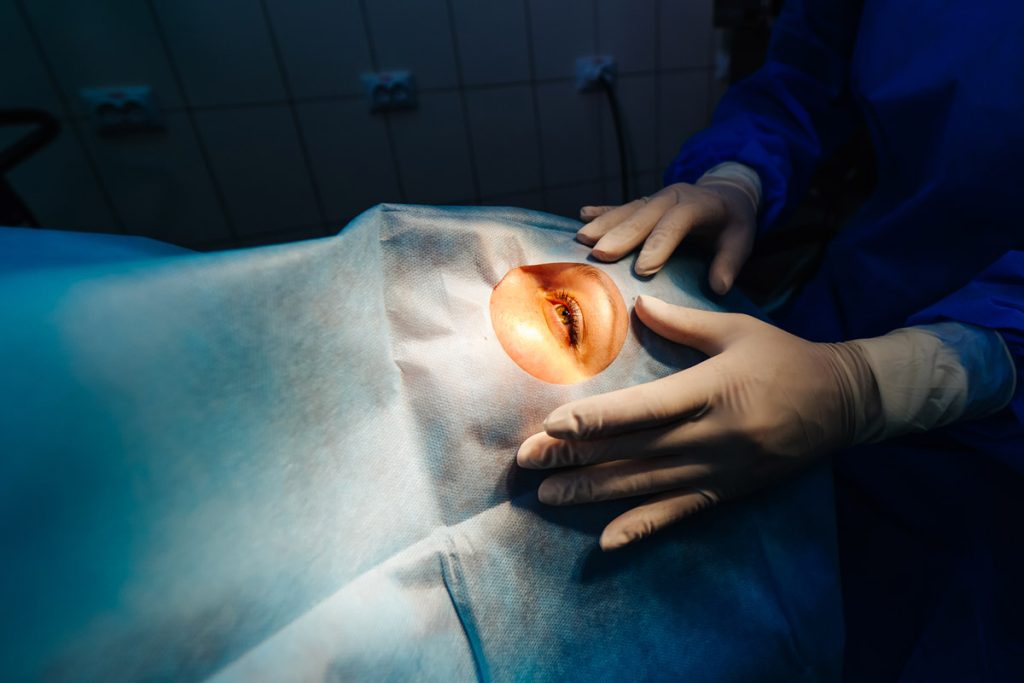
Under computer control, the femtosecond laser performs the most important step affecting the success of laser surgery — the creation of a flap, a thin incision in the cornea — at the desired level and without a blade, using laser light. The creation of the incision with laser light rather than a blade minimises risk. The femtosecond laser increases the success of surgery by allowing personalised incisions to be created.
At the same time, in patients with a suitable corneal structure, it provides high success rates, low risk and the ability to create a flap of the desired thickness. Because we can lift a thin flap with the femtosecond laser, we can also apply excimer laser in patients with high refractive errors.
Creating a flap with the femtosecond laser is painless and far more comfortable. The risk of post-operative dry eye is expected to be lower with the femtosecond laser.
Prepared by the Editorial Board of the Eye Foundation Hospitals.