Drooping eyelid is a condition in which the eyelid is positioned low enough to cover the coloured part of the eye. Medically known as “ptosis”, it may be congenital or develop later in life.
Congenital drooping eyelid (congenital ptosis) occurs because the muscle that should open the eyelid is underdeveloped. It may affect one eye or both. If the condition obstructs the child’s vision, visual development cannot progress as it should, and amblyopia (lazy eye) may develop. For this reason, early diagnosis and treatment are important.
Acquired drooping eyelid, which develops in later years, may arise from various forms of nerve palsy, muscle diseases, medications, tumours, accidents and even from many years of contact-lens use. The most common form of drooping eyelid in the general population is age-related. As we get older, the strength of the muscle that opens and closes the eyelid decreases, the load it carries increases, and it tires and droops more quickly.
Symptoms of Drooping Eyelid
The general symptoms of drooping eyelid are as follows:
- The eyelid covering too much of the coloured part of the eye when the eye is open
- Loss of elasticity in the eyelid
- Narrowing of the field of vision
- The need to lift the eyebrows to pull the eyelids up in order to see
- Little change in vision even when the patient attempts to move the eyelid up or down
- A tired, sleepy expression on the face
What Are the Causes of Drooping Eyelid?
In adults, the leading cause of drooping eyelid is age-related changes. Together with this, contact-lens use is also an important risk factor. Over time, contact lenses can weaken the muscle that lifts the eyelid, causing it to function less well.
Drooping eyelid can also be caused by eye injuries, eye infections, allergic conditions and tumours. In cases of excessive rubbing of the eyelid, drooping may develop because the muscle that lifts the eyelid becomes detached from its attachment.
Congenital drooping eyelid results from underdevelopment of the muscular system that lifts the eyelid; genetic factors play a role. Familial transmission may be observed. In some cases of congenital drooping eyelid, the eyelid muscle may open and close in synchrony with the muscles that move the mouth.
Drooping eyelid may affect one eye or both. If the cause is a muscle disease, both eyes are usually affected together.
Treatment of Drooping Eyelid
Treatment of drooping eyelid is usually surgical. The timing of surgery and the treatment to be followed afterwards are determined by evaluating many factors, including the patient’s age, other medical conditions and the degree of drooping. The strength of the muscles that lift the eyelid is also evaluated. In patients with weak muscle strength, the success rate of muscle-directed surgery is lower.
In paediatric patients, surgery is performed as early as possible so that visual development is not negatively affected and amblyopia does not develop; eye drops, patching therapy and the use of special glasses may then be recommended.
In adult patients, the surgical procedure can remove excess tissue in the eyelid or strengthen the eyelid muscle through direct intervention.
Drooping Eyelid Surgery
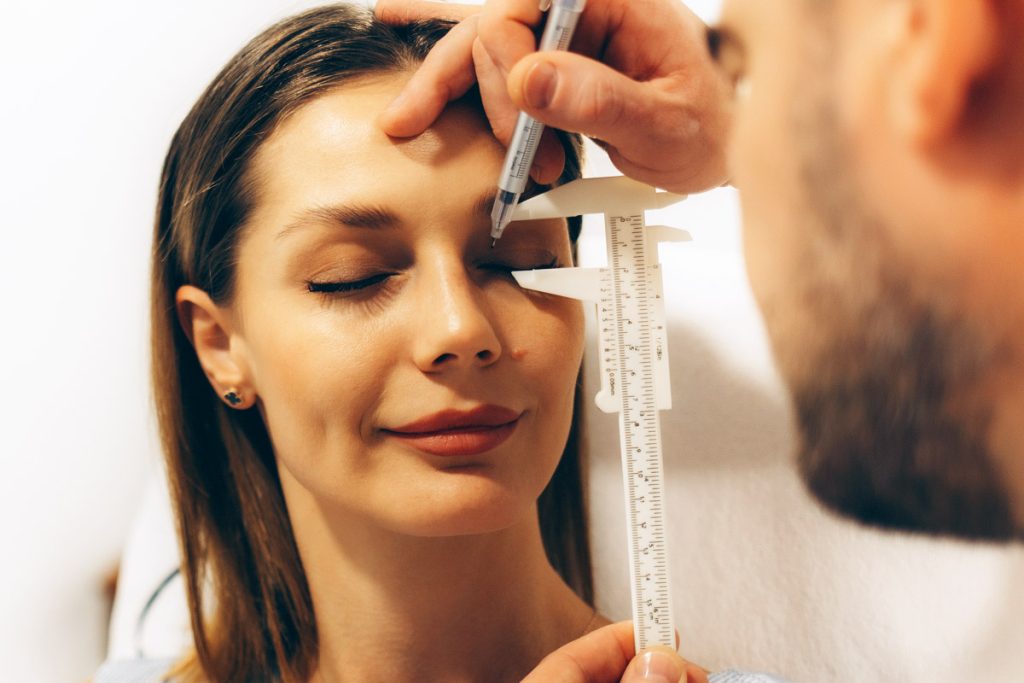
Drooping-eyelid surgery is performed by oculoplastic specialists. Usually carried out under local anaesthesia, the procedure takes approximately 30–40 minutes per eye.
In patients with weak eyelid-muscle strength, in order to harness the lifting muscles of the eyebrows, externally applied materials such as silicone, or autogenous materials such as the fascia lata tendon taken from the leg, may be used.
Other Eyelid Disorders
Although drooping eyelid (ptosis) is the most common among congenital eyelid disorders, other conditions may also be encountered: fusion of the eyelid (ankyloblepharon), inward turning of the eyelid margin (entropion), outward turning of the eyelid margin (ectropion), incomplete formation of the eyelid (coloboma), an additional row of lashes (distichiasis) and inward turning of the eyelashes (trichiasis).
With ageing, drooping of the brows and eyelids, bagging or hollowing around the eyes, and inward or outward turning of the lower eyelid may also occur. These complaints may also appear at younger ages due to hereditary factors.
All these conditions, which generally require surgery, should be assessed by an oculoplastic specialist for treatment.
Eyelid Aesthetics (Blepharoplasty)
With ageing and loss of skin elasticity, the skin begins to sag. Correspondingly, the eyes also develop bagging, looseness, discoloration and wrinkles. Measures such as sun protection, regular sleep, proper nutrition and avoidance of smoking and alcohol reduce the risk of developing eyelid problems.
The surgical procedures applied by an oculoplastic surgeon to both the lower and upper eyelids are called eyelid aesthetics or blepharoplasty.
In upper-eyelid drooping surgery, the excess skin and muscle tissue in the area are removed by excision. To avoid scarring, the incision is made along the natural eyelid crease. Patients who undergo eyelid aesthetics may also opt for what is known as “almond-eye aesthetics”, in which the eye is given an almond shape.
In lower-eyelid aesthetics, the sunkenness caused by the fat pads — which originally lie over the cheekbones but shift with age — and the bags caused by loss of skin elasticity are corrected. The surgical incision is made just below the lashes, the fat pads are returned to the under-eye hollow, and excess skin and muscle are excised. If under-eye hollowness persists, fat injection to the under-eye area may be applied after surgery.
Eyelid aesthetics is a permanent procedure with an effect lasting around 10–15 years.
Blepharoplasty is sometimes confused with blepharitis, which refers to inflammation of the eyelid. This is because both words are derived from blephar-, meaning “eyelid”. Blepharitis is an eye condition caused by inflammation of the eyelids for various reasons, and is treated with antibiotic creams prescribed by a doctor.
Eyelid Aesthetics Recovery
In the first 3 days after eyelid aesthetics, there may be redness, swelling and bruising. As your doctor will advise, applying cold compresses to the area after surgery will largely prevent swelling and bruising. The dressing is removed after 3 days and the patient can return to daily life.
Within 1 week the swelling subsides and bruising disappears. After 1 month the eye reaches its ideal final appearance.
Is Non-Surgical Treatment of Drooping Eyelid Possible?
In people with only very mild sagging, bagging or wrinkling of the eyelids, a laser procedure can address these issues up to a certain point. For this procedure, an anaesthetic cream is applied to the area and the laser is delivered. The procedure does not require any incision or sutures and takes approximately 10–15 minutes; the treated area first scabs over, and the scabs fall away within 7–10 days. The procedure needs to be repeated for a few sessions. Its effects last between 2 and 5 years. In other words, it is not as permanent a solution as surgery.
Some sources claim that drooping eyelid can be treated with exercises. While these exercises may help restore elasticity to a certain extent, it is not possible to completely prevent or treat drooping eyelid with exercise alone.
Prepared by the Editorial Board of the Eye Foundation Hospitals.