
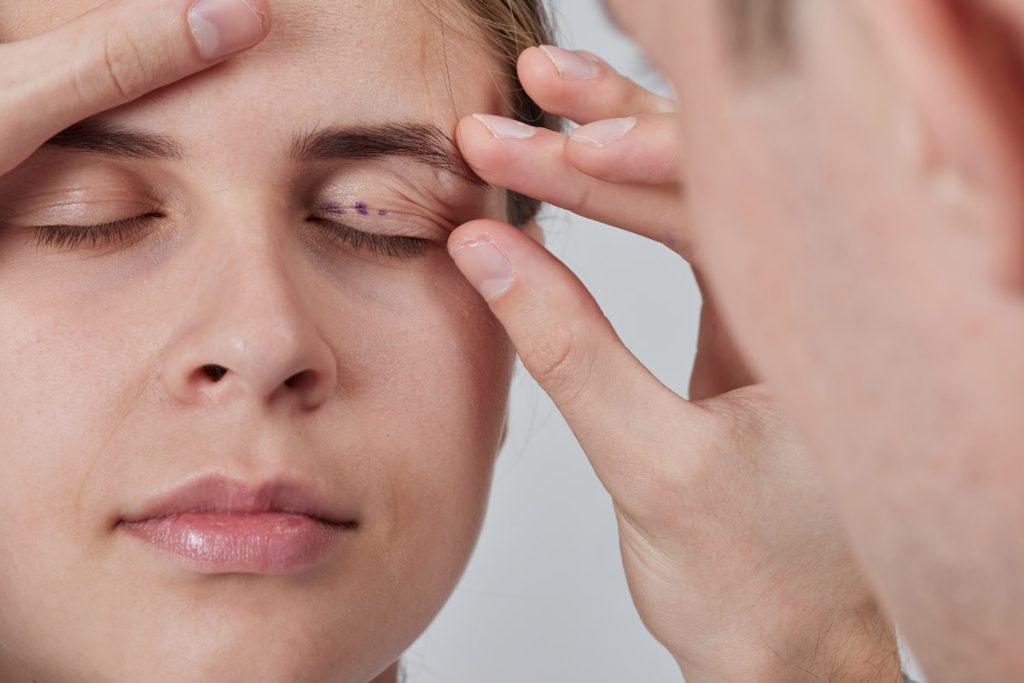
Drooping eyelid, medically known as ptosis, is a condition in which the eyelid is positioned low enough to cover the upper part of the eye.
Ptosis, which has many causes and can occur at any age, may affect one eye or both eyes. There may be babies who are born with a drooping eyelid, and there may also be senile drooping that develops with ageing. It may be caused by various nerve or muscle conditions, medications, tumours and accidents — or, for example, by years of contact-lens use in which the muscle is weakened by friction over many years. Drooping eyelid may present in different degrees in different people. In some patients it is very mild, while in others it can present in severe forms that completely cover the eye.
In severe forms — that is, in cases where the pupil is so obstructed that vision is impaired — surgery is always recommended, particularly in infancy and childhood. This is because if the pupil remains covered during the developmental period, visual development will not be completed and amblyopia, which is difficult to treat, may develop. In babies in particular, it is important to operate early to open the pupil.
In mild cases — that is, when the pupil is not covered — aesthetic appearance and the patient’s psychological state must be evaluated. Because the affected eye is seen by others as smaller, particularly in childhood a sense of inadequacy, withdrawal and lack of self-confidence may develop. Because it is not only visual development but also psychological development that will be harmed, treatment in childhood is important.
How is drooping eyelid treated?
Surgery is usually recommended for the treatment of drooping eyelid. Different surgical techniques are used depending on the condition of the muscle that moves the eyelid. In those with good muscle strength, muscle-strengthening surgery is preferred; in patients with weak muscle strength, the nearest muscle — the forehead muscle — is recruited for assistance. General anaesthesia is used in children and local anaesthesia in adults. After surgery, swelling and bruising in the eyelid during the first week are normal. The sutures are removed one week after surgery and the patient resumes normal life. Although the importance of treatment in childhood is very great, in later ages too — in cases that obstruct vision — treatment must be carried out using the methods deemed appropriate by your doctor.
Prepared by the Editorial Board of the Eye Foundation Hospitals.