
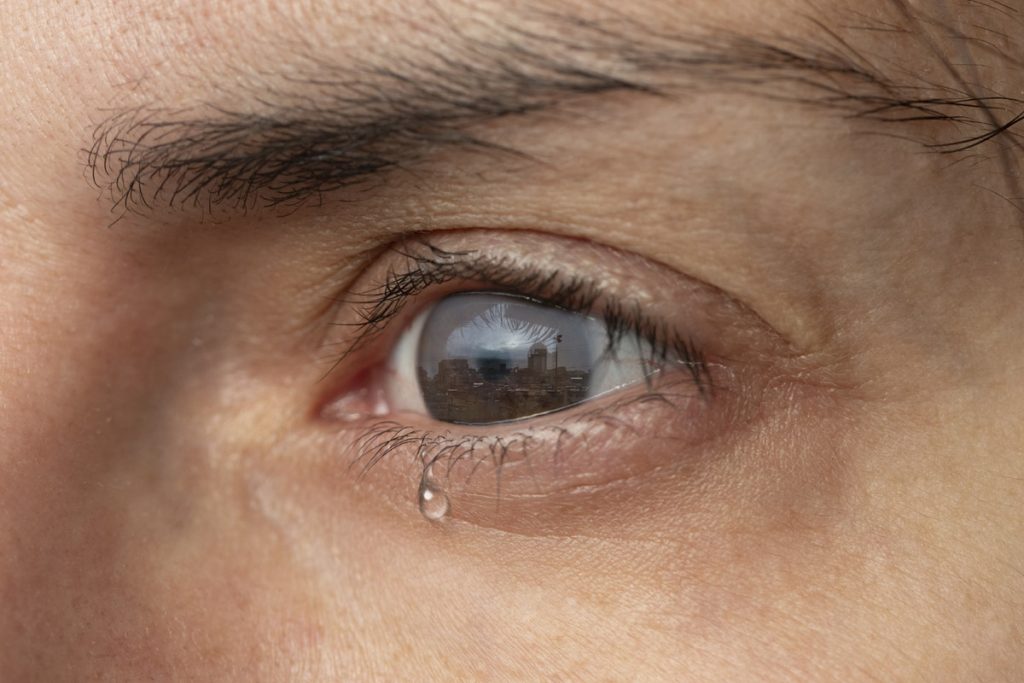
When we say “a cold”, the first thing that comes to mind is the “chill” with symptoms such as runny nose, sneezing and cough — but our eyes can also have a kind of cold. Eye flu or conjunctivitis, also known as “eye cold”, is a condition seen frequently in people allergic to pollen, particularly in the spring months. Essentially caused by inflammation of the membrane covering the surface of the eye, the condition can also be caused by bacteria or viruses, independently of any allergy. It manifests with symptoms such as watering, redness, pain, a stinging sensation and itching in the eyes.
Let’s take a detailed look at conjunctivitis: what helps, its symptoms, how it clears, what causes it, how it is treated, and whether it is contagious.
What Is Conjunctivitis?
The transparent membrane covering the white part of the eye and the inner surface of the eyelids is called the conjunctiva. Inflammation of the conjunctiva for bacterial, viral or allergic reasons is called conjunctivitis or eye cold. It can affect both eyes at once or, sometimes, only one eye.
Because the affected eye takes on a bloodshot appearance, the condition is also known as red eye or pink eye.
- Bacterial conjunctivitis: Most commonly caused by the use of contact lenses that have not been cleaned and cared for properly. Improperly used eye creams or eye make-up can also cause bacterial conjunctivitis. It is contagious.
- Viral conjunctivitis: It is transmitted through close contact with people who have conjunctivitis or an upper respiratory infection. If this infection is not treated, the patient’s complaints may persist for months and may cause damage that leads to refractive error or reduced vision.
- Allergic conjunctivitis: The most common type of conjunctivitis, allergic conjunctivitis, generally occurs in spring when pollen appears. At other times, the person may develop an allergic reaction to eye drops they have taken for another condition, or to animal dander. Allergic conjunctivitis is not contagious.
Conjunctivitis in Babies
Conjunctivitis, a condition seen at all ages, is also frequently seen in newborns and babies. In babies, conjunctivitis can be caused by irritation or by blockage of the tear ducts.
The most important sign of conjunctivitis in babies — along with redness — is discharge. If the baby’s eyes are red, full of discharge and the eyelids are swollen, the condition may be due to conjunctivitis. As in adults, it may be caused by allergic, viral or bacterial factors.
For conjunctivitis in babies, breast milk is often recommended as a popular remedy. Although breast milk is a miraculous source of healing, it may not be effective for every type of conjunctivitis. Because the treatment must be tailored to the cause, you must consult a doctor.
What Causes Conjunctivitis?
The answers to the questions how does conjunctivitis develop, what causes it vary by type.
Conjunctivitis occurring in spring is usually allergic. In allergic conjunctivitis, genetic factors may also play a role. For example, children diagnosed with asthma or with a family history of allergic disease have a higher likelihood of developing allergic eye conditions.
Viral conjunctivitis is more common in periods when the weather has turned cold and we spend more time in enclosed spaces. The increased contact in such environments creates conditions favourable for the virus to multiply and spread.
Bacterial conjunctivitis, caused by inattention to hygiene, can occur in any season.
Symptoms of Conjunctivitis
Although the symptoms of conjunctivitis vary by type, the most common symptoms include redness in the white of the eye or in the eyelid, itching of the eye, burning and watering of the eye.
Other symptoms may include:
- Pain
- Sensitivity to light
- Blurred vision
- Swelling and oedema of the eyelids
- Discharge or crusting at the eyelashes
Viral or bacterial conjunctivitis that begins in one eye can spread to the other within 1–2 days, so treatment must be started as early as possible.
Conjunctivitis Treatment
Although the method and duration of treatment vary by type of conjunctivitis, with the eye drops, cream or solution prescribed by the doctor, the condition usually resolves within 7 to 10 days.
How Does Conjunctivitis Clear?
In addition to regular use of the medications prescribed by the doctor at the indicated dose and method, paying attention to the following points will accelerate treatment and prevent the spread to the other eye or to other people:
- Wash your hands with soap and water before instilling drops or applying any medication.
- Do not apply remedies you have heard from the internet or from friends and family that are outside of the treatment recommended by the doctor. Do not cover your eye with tape or a bandage.
- Do not let others use your personal items such as glasses, towels, make-up products and pillows, and do not use others’ items either.
- Until the conjunctivitis clears, use paper towels if possible, do not wear make-up and change your pillowcase every day.
- If you wear contact lenses, prefer to use glasses instead of contact lenses until the conjunctivitis resolves.
- To avoid eye strain, where possible do not spend long periods looking at screened devices such as phones and computers.
- Avoid dusty places, air-conditioned environments and places with tobacco smoke.
- Do not enter the pool or sea for a few days; if you must, wear swimming goggles. Do not forget to disinfect the swimming goggles after use.
What Helps Conjunctivitis?
On the internet, many so-called natural methods are recommended to relieve stinging, burning and pain. These include black-tea compresses, raw potato application, cleansing with aloe vera, wiping with saline water and cleansing with apple-cider vinegar in water.
The best course of action is to disregard all such suggestions and follow only the doctor’s instructions.
In allergic conjunctivitis, to relieve symptoms or to clean off discharge, it may be appropriate to gently compress the eye with clean cotton wool moistened with boiled and cooled lukewarm water. Although this type of conjunctivitis is not contagious, it is still better not to use the same piece of cotton for both eyes.
It is also important to follow, for every type of conjunctivitis, the recommendations listed in the “How does conjunctivitis clear?” section above.
Prepared by the Editorial Board of the Eye Foundation Hospitals.