
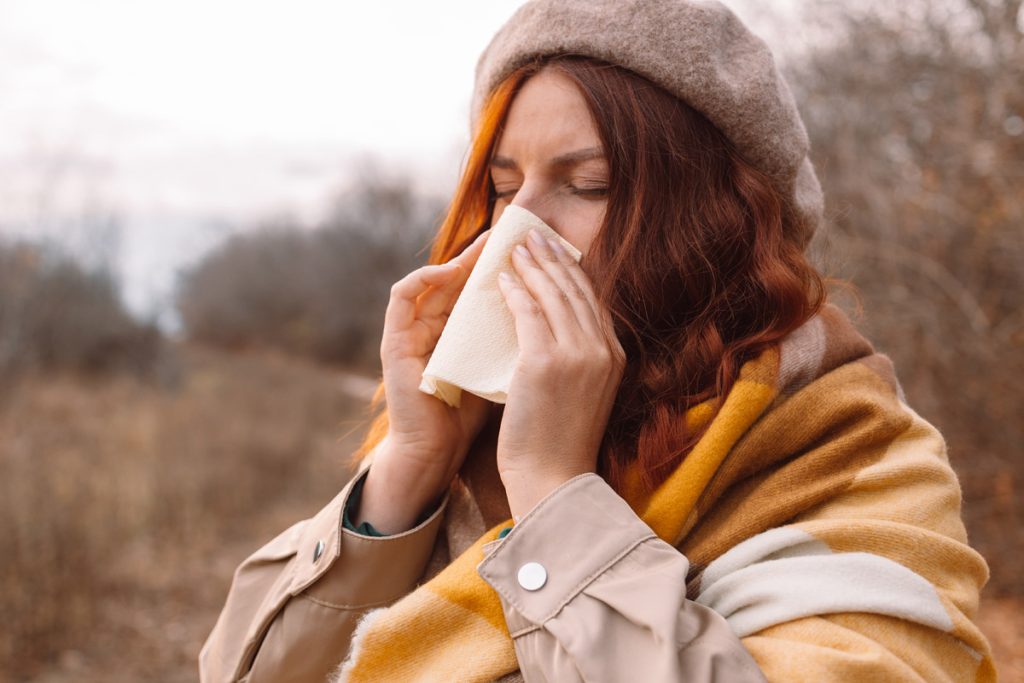
Autumn is coming again — the days are getting shorter, the weather is gradually changing and schools are starting. Your child, newly enrolled at school, has been constantly rolling their eyes for the past few days, and sometimes screwing them shut and rubbing them. When you ask why, the answer is “I don’t know”. Could it be a reaction to starting school? Or perhaps for the past few days you yourself have had an unbearable urge to scratch your eyes — the more you scratch, the more you want to — and your eyes are now bloodshot. The reason for all this could well be eye allergies, which can increase in autumn.
Throughout life, our natural immune system protects us unknowingly from many situations that are harmful to our health, and prevents us from getting ill. Allergy can be described as a series of reactions in sensitive constitutions in which the body responds to situations that are not actually harmful to health with unnecessary, excessive and disproportionate — and sometimes harmful — processes.
There are many substances in our surroundings, called allergens, that can trigger allergies. Pollens (the dust of flowers) from plants, dust, polluted air, moulds, animal dander, mites (microscopic insect-like parasites that live alongside us in our immediate environment), chemicals used for various purposes, make-up products, contact lenses, and even — if we are sensitive to one of their components — the eye drops we use for allergies can sometimes trigger allergic reactions.
The most common symptoms of eye allergies are itching and redness developing in both eyes. However, sometimes — alongside non-ocular symptoms such as hay fever and eczema — burning, stinging, watering, various types of discharge, discomfort from light, blurred vision, frequent blinking, rubbing of the eyes, swelling of the eyelids or drooping of the upper eyelids, and squinting may also be observed, depending on the type of eye allergy. There are many types of eye allergy: seasonal or perennial conjunctivitis, chronic atopic conjunctivitis, vernal conjunctivitis, giant papillary conjunctivitis and other less common types.
As well as reducing our quality of life, eye allergies can also affect the cornea — the most important optical component of the eye (the transparent layer covering the coloured part) — and damage our vision. Conditions such as keratoconus (a progressive structural deterioration of the cornea), corneal ulcer and corneal opacities may accompany eye allergies. For this reason it is important to consult your ophthalmologist without delay. After the examination, your doctor will plan your treatment after making a differential diagnosis from conditions such as infections, dry eye and glaucoma, which can sometimes resemble eye allergies in their symptoms but require different medications for treatment.
In treatment, your ophthalmologist may prescribe various eye drops and sometimes oral medications. The point to be careful about is not to exceed the recommended duration for corticosteroid-containing drops. Staying as far as possible from allergy triggers, wearing sunglasses, applying cold compresses and maintaining hygiene will also help with the treatment.
Prepared by the Editorial Board of the Eye Foundation Hospitals.