
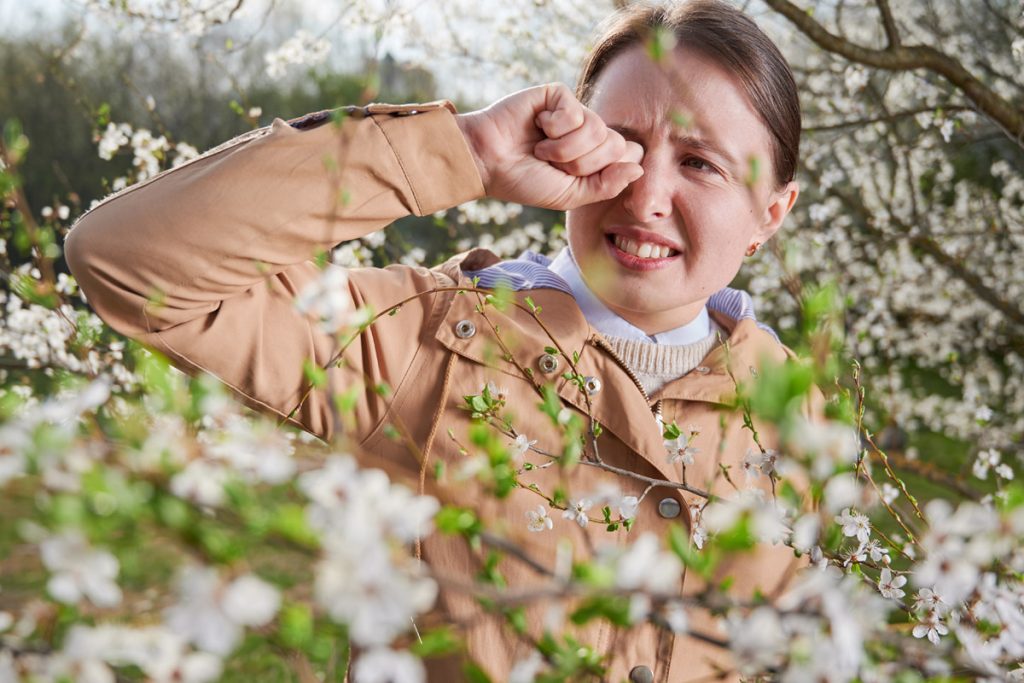
Medically known as allergic conjunctivitis, eye allergy occurs when an allergen — such as pollen, dust mites, animal dander or mould — irritates the eye. Although this is a harmless substance to which most people do not react, your immune system perceives it as an allergen and responds. As a result, your eye or eyes produce a chemical called histamine in order to fight the allergen. Histamine then dilates the blood vessels so that defence cells can reach the area where the foreign substance is found. This causes redness, itching and swelling in the eye. Your eyes may also water or burn. Unlike other forms of conjunctivitis, eye allergy is not contagious.
What Are the Symptoms of Eye Allergy?
There are different types of eye allergy. Symptoms vary accordingly, but red, swollen or itchy eyes, together with burning and watering, are the most common. In some cases nasal allergies may also accompany the condition. In such cases, nasal congestion, sneezing, headache, an itchy throat or a cough may also be seen. If the type of eye allergy is not identified and treated, symptoms intensify and sensitivity to light may develop.
Because the eye-allergy symptoms listed here may also point to other eye conditions such as eye infections, an accurate diagnosis is important. Whatever the case may be, you should not self-medicate.
Types of Eye Allergy
Eye allergy may be a shorter, seasonal reaction to outdoor or household allergens for as long as exposure lasts, or it may persist year-round.
- Seasonal Allergic Conjunctivitis
This is the most common eye allergy. It is caused by pollen in the air during spring and autumn, the seasonal transition periods. Both eyes experience watering, redness, itching and burning. Nasal discharge, sneezing and nasal congestion may also accompany it. Darkening under the eyes may be observed in people with seasonal allergic conjunctivitis. Swelling of the eyelids may occur. Because itching is uncomfortable, in cases where there is a tendency to rub the eyes, infection may follow.
- Perennial Allergic Conjunctivitis
Symptoms are similar to those of seasonal allergic conjunctivitis, but they are milder and persist throughout the year. Instead of pollen, it is caused by household allergens such as dust mites, pet dander and mould to which we are exposed at home. It is less common.
- Vernal Keratoconjunctivitis
This is a more serious type of eye allergy. It can occur year-round, but symptoms may worsen seasonally from spring to late summer. It is more common in regions with a warm, dry climate, and cases in such regions tend to be more severe. It is mostly seen in young adult men with eczema or asthma. It usually begins after the age of 5 and resolves by adolescence or by the age of 30 at the latest. In some cases it may persist longer. In children, vision may decline due to corneal involvement. The cause is not fully known, but it is often encountered in those with a family history of allergies. Long-term treatment with allergy drops is required.
- Atopic Keratoconjunctivitis
This is the most risky type of eye allergy if not treated promptly and appropriately. It is more commonly seen in men and at older ages. It is accompanied by redness, severe itching and a burning sensation. So much mucus is produced that the eyelids may stick together when you wake up. Blepharitis (inflammation of the eyelash bases) is frequently observed. Abnormal corneal blood vessels and cataract may develop. Symptoms continue throughout the year. If left untreated, it can leave scarring on the cornea and conjunctiva, leading to reduced vision and even vision loss.
- Contact Allergic Conjunctivitis
This is the eye allergy associated with wearing contact lenses. It is caused by irritation of the eye either by the contact lenses themselves or by proteins in the tears binding to the surface of the lens. Itching, redness, mucous discharge and discomfort when wearing lenses are experienced.
- Giant Papillary Conjunctivitis
This is a severe form of contact-related allergic conjunctivitis. Fluid-filled sacs or papules form on the upper lining of the inner eyelid. Itching, swelling, watering, mucous discharge, blurred vision, sensitivity to wearing contact lenses and a sensation of a foreign body in the eye are among the symptoms.
Diagnosis of Eye Allergy
The diagnosis is made by an allergy specialist or by a clinician specialised in diagnosing and treating allergies, by performing a number of tests. The allergy specialist considers when the symptoms first started, how long they have lasted, the patient’s medical history and all the symptoms. However, a skin-prick test may be required to identify the actual allergen.
Eye Allergy Treatment
In addition to reducing your quality of life, eye allergy can — depending on its type — also damage your vision. For this reason it is very important to consult your ophthalmologist without delay so that the cause and type can be identified and appropriate treatment applied.
Your doctor may ask you to use saline drops to wash out allergens, or antihistamine eye drops. Oral medications may be prescribed, or immunotherapy (allergy shots) may be given. You should use the eye drops and/or oral medications prescribed by your doctor on time, at the recommended dose and for the recommended duration. In particular, with corticosteroid-containing drops, the recommended duration should not be exceeded.
What Helps Eye Allergy at Home?
In the meantime, taking some precautions at home or in the environments you are in will help improve your quality of life. The key is to stay as far as possible from the triggers of your allergy.
If your trigger is pollen, take care not to spend too much time outdoors during periods when pollen counts are high. Avoid going out, particularly on windy days. When you do go out, wearing sunglasses will help. Cold compresses and good hand hygiene can also relieve symptoms.
If your allergy is triggered by mould, since high humidity causes mould, pay attention to humidity levels in your home. Clean areas with high humidity, such as the bathroom and kitchen, frequently. If necessary, you can use a dehumidifier.
If you are sensitive to dust mites, choose bed linen made from allergen-reducing fabrics and wash them frequently at a temperature of at least 60 °C. When cleaning the house, you may prefer wet cleaning to dry cleaning, which raises dust into the air.
If you are allergic to pet hair and dander and you also have a pet, you should not allow the pet into the bedroom in particular. If you have a garden, you can encourage your pet to spend more time outdoors. We also recommend choosing wooden or ceramic flooring over carpet.
And of course, whatever the trigger of your allergy may be, however much your eye bothers you, please do not rub your eye.
Prepared by the Editorial Board of the Eye Foundation Hospitals.